
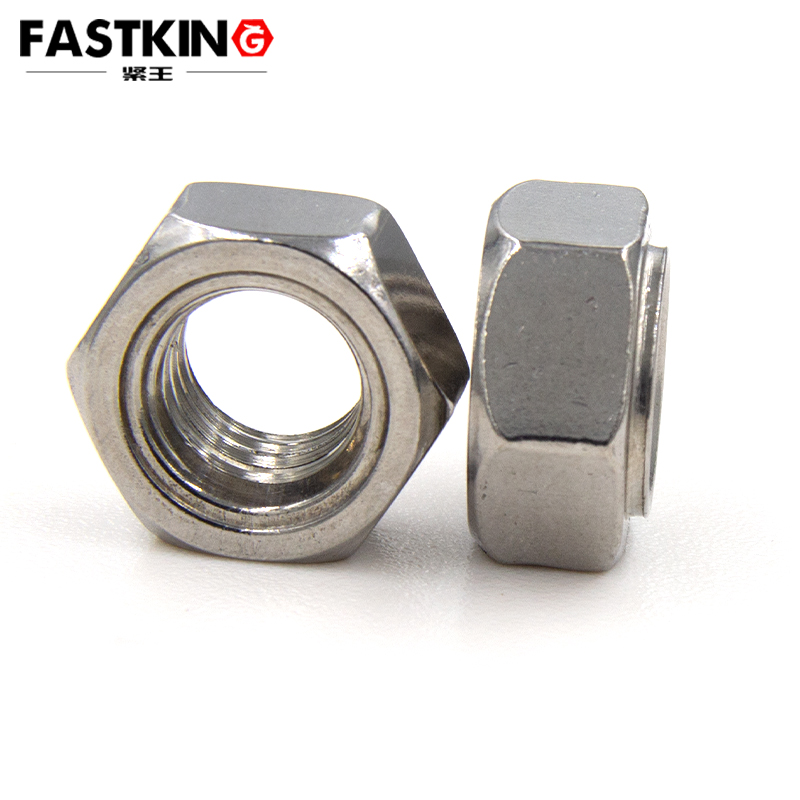
As an indispensable fastener in mechanical connections, the rational selection of hexagonal welding nuts directly determines the firmness, safety and service life of the connection. Especially in core fields such as automobile manufacturing, machinery manufacturing and construction, improper selection can easily lead to hidden dangers such as welding failure and loose connections. Therefore, the selection should focus on the four core dimensions of specification matching, material adaptation, performance compliance and scene adaptation, and be scientifically selected in combination with actual application needs. The detailed selection guide is as follows.
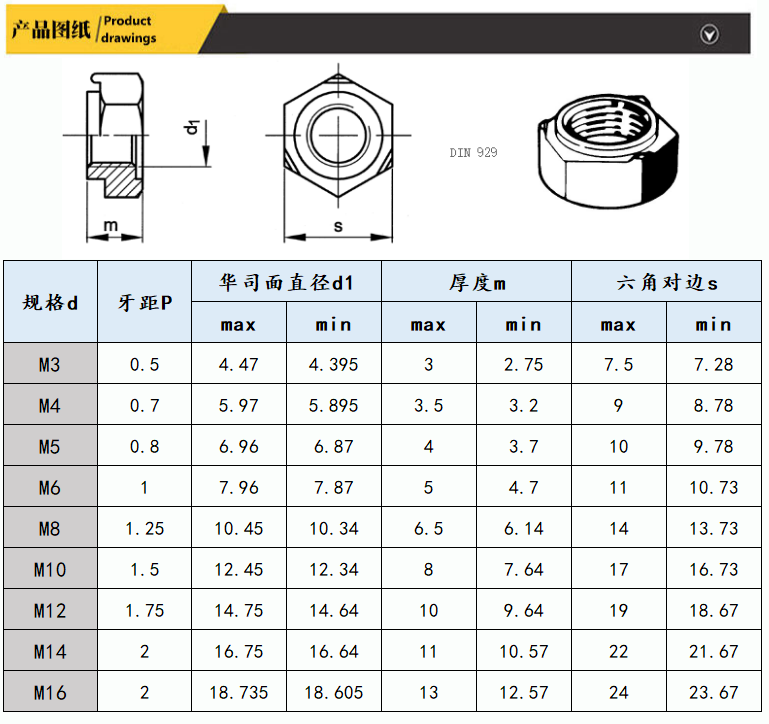
Specification parameter matching is the basic premise for selection, and the core is to grasp three key points: thread specification, overall dimension and welding method. The thread specification must be completely consistent with the supporting bolts. For common metric threads (such as M4, M6, M8), the pitch must be clearly specified to avoid failure to tighten or loose connection caused by thread mismatch; the overall dimension should be adapted to the reserved position of the workpiece in combination with the installation space. For scenes with narrow space, thin hexagonal welding nuts should be preferred, and sufficient space for wrench operation should be ensured. The welding method should be selected according to the workpiece material and production process. For example, arc welding is suitable for thick-walled workpieces, spot welding is suitable for thin-plate workpieces, and projection welding is suitable for mass automatic production. During selection, it is necessary to match the corresponding welding equipment and process requirements.
Material adaptation is the key to ensuring welding quality and service durability. The material of the hexagonal welding nut must be compatible with the material of the base workpiece to avoid insecure welding and cracks caused by material differences. Low-carbon steel materials (such as Q235, 1010) have low cost and good weldability, are suitable for ordinary carbon steel workpieces, and are widely used in the general machinery field; stainless steel materials (such as 304, 316) have strong corrosion resistance and rust resistance, and are suitable for humid and corrosive environments, such as chemical equipment and outdoor machinery; high-strength alloy steel materials are suitable for high-pressure and high-load scenarios, such as automobile chassis and engineering machinery. It is necessary to ensure that the nut strength matches the load-bearing requirements of the workpiece to avoid overload fracture.
Performance compliance is the core requirement for selection, and focus should be paid to welding performance, mechanical performance and precision grade. In terms of welding performance, the nut must have good weldability, and there should be no defects such as pores, cracks and incomplete penetration after welding to ensure the formation of an integral force-bearing structure with the workpiece; the mechanical performance must meet the actual load requirements, including tensile strength, yield strength and hardness, to avoid deformation or fracture under vibration and impact environments. In terms of precision grade, Grade A precision is sufficient for ordinary scenes, and Grade B precision should be selected for precision equipment and high-end machinery to ensure thread precision and overall dimension tolerance, and guarantee the accuracy and stability of the connection.
Scene adaptation requires adjusting the selection strategy according to the actual use environment and working condition requirements. For scenes with frequent vibration (such as automobile engines and main shafts of mechanical equipment), nuts with firm welding and good anti-loosening performance should be selected, which can be matched with anti-loosening structure design; for humid and corrosive environments, stainless steel or nuts with galvanized or chrome-plated surfaces should be preferred to improve rust and corrosion resistance; for high-temperature environments, high-temperature resistant materials should be selected to avoid connection failure caused by material softening; for mass production scenes, nuts suitable for automatic welding processes should be selected to improve production efficiency.
In addition, attention should also be paid to product quality and standards during selection. Priority should be given to products that meet national standards (such as GB/T 13681) to avoid potential safety hazards caused by inferior nuts. At the same time, combined with the cost budget, under the premise of meeting performance and scene requirements, materials and specifications should be reasonably selected to maximize cost performance. In summary, the selection of hexagonal welding nuts needs to comprehensively grasp the four cores of specification, material, performance and scene to ensure a reliable and durable connection and provide guarantee for the stable operation of equipment.