
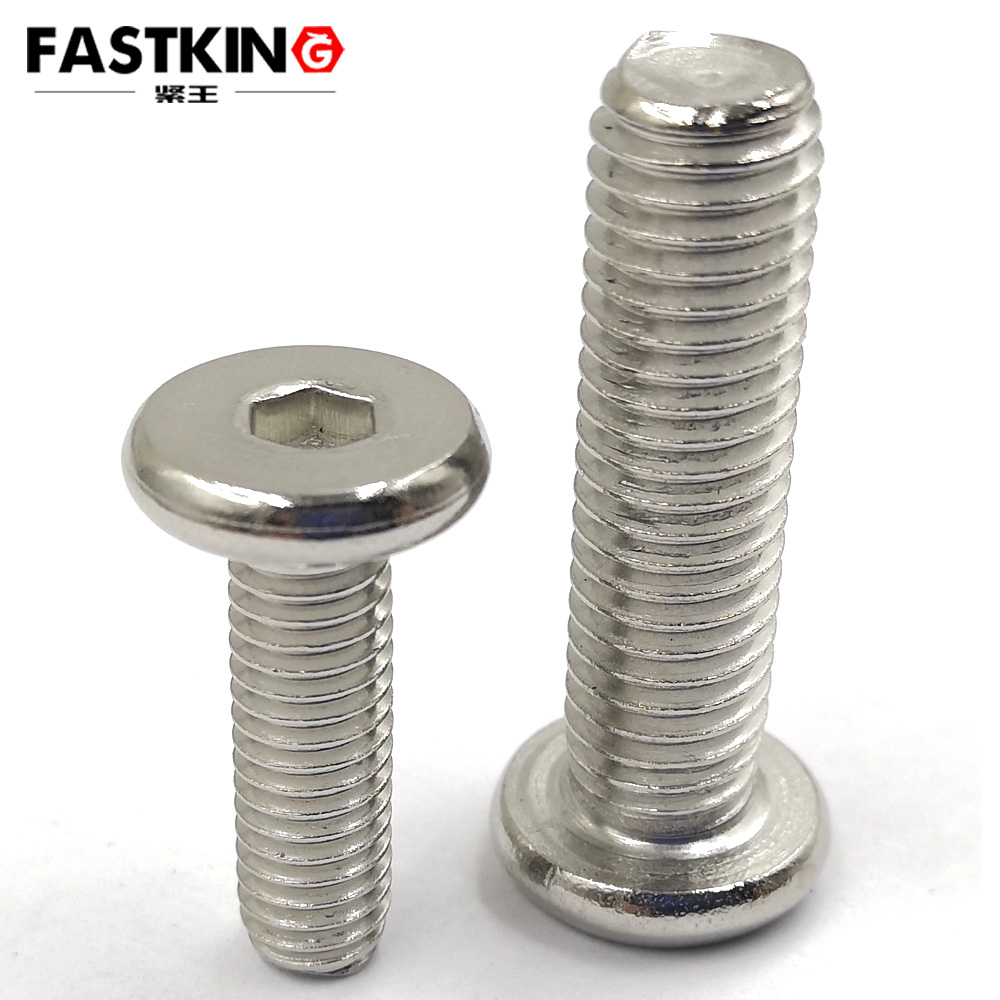
I. Structural Features of Pan Head Screws
Pan head screws feature a rounded head profile and a flat underside, combining the aesthetic appeal of round heads with the stability of flat heads. Their main characteristics include:
- Smooth Appearance: The gently curved head is ideal for exposed installation and enhances the visual quality of furniture.
- Uniform Stress Distribution: The rounded transition reduces stress concentration and lowers the risk of head breakage.
- Good Tool Compatibility: Compatible with Phillips, hex socket, Torx, and other drive types.
- Low Space Requirement: With a moderate head height, they are suitable for installation in confined spaces.
II. Main Types of Furniture Screws and Applications
-
Self-Tapping ScrewsNo pre-drilling required; can be directly driven into wood or plastic. Suitable for quick assembly of panel furniture. They have a large pitch and strong holding power, but limited reusability.
-
Machine ScrewsUsed with pre-tapped holes or nuts. High precision and reusable, ideal for precision parts such as metal connectors and hinge mounting.
-
Wood ScrewsSpecially designed for solid wood with deep threads and wide pitch. They cause less damage to wood fibers and offer strong holding force, perfect for solid wood furniture frames.
-
Combination ScrewsIntegrated with washers, providing excellent anti-loosening performance. Suitable for furniture in vibrating environments such as office chairs and bed frames.
III. Core Selection Factors
1. Material Selection
表格
| Material | Features | Suitable Applications |
|---|---|---|
| Carbon Steel 1022 | High strength, low cost | Indoor furniture in dry environments |
| 304 Stainless Steel | Corrosion-resistant, aesthetic | Kitchen, bathroom and outdoor furniture |
| 316 Stainless Steel | Excellent corrosion resistance | Coastal areas and high-humidity environments |
| Copper / Brass | Decorative, antibacterial | High-end and retro-style furniture |
2. Size Matching
-
Diameter Selection
- Light furniture (shelves, small drawers): M3–M4
- Medium furniture (tables, chairs, cabinet doors): M4–M5
- Heavy furniture (bed frames, wardrobes): M5–M6 and above
-
Length CalculationScrew length = thickness of fastened part + thread engagement depth (at least 1.5 times the diameter).Excessively long screws may penetrate through; short screws provide insufficient holding force.
3. Surface Treatment
- Zinc plating: Basic rust protection, low cost, suitable for indoor furniture
- Nickel plating: Bright silver finish, better corrosion resistance than zinc plating, ideal for exposed parts
- Black oxide: Subtle and aesthetic, suitable for industrial-style furniture
- Dacromet: Superior anti-corrosion, hydrogen embrittlement-free, suitable for outdoor furniture
- Powder coating / painting: Color-matched with furniture, high decorative effect
4. Drive Types
- Phillips recess: Most common, widely available tools, but prone to cam-out under high torque
- Hex socket: High torque transmission, less cam-out, suitable for mass production
- Torx recess: Tamper-resistant, high torque, ideal for high-end furniture
- Combination recess: Phillips + hex socket, balancing appearance and assembly efficiency
IV. Selection Recommendations by Furniture Type
- Panel Furniture: M4 self-tapping screws with zinc or nickel plating, Phillips or hex socket drive. Use special screws for particleboard based on board density.
- Solid Wood Furniture: Wood screws, 304 stainless steel, length adjusted according to wood thickness. Pre-drilling recommended for hardwood to prevent cracking.
- Metal Furniture: Machine screws with nuts, stainless steel, hex socket drive for reliable fastening.
- Upholstered Furniture (sofas, mattresses): Combination screws with spring washers to prevent loosening under long-term pressure; M5 or above recommended.
- Outdoor Furniture: 316 stainless steel with Dacromet treatment; regular inspection and replacement required.
V. Installation Notes
- Pre-Drilling: Recommended for solid wood and hard boards, with hole diameter approx. 70–80% of screw diameter.
- Torque Control: Avoid over-tightening to prevent wood cracking or screw breakage.
- Vertical Installation: Angled installation reduces holding force and weakens structural stability.
- Regular Inspection: Re-tighten after one year of use to compensate for material creep.
VI. Conclusion
Scientific selection is fundamental to furniture quality. Choosing pan head screws requires a comprehensive evaluation of material, size, surface finish and service environment. There is no “universal screw”, only the most suitable one.
Establishing standardized selection specifications improves product quality, reduces procurement costs and boosts production efficiency. In today’s highly competitive furniture industry, details determine success or failure — a small screw can even become key to brand reputation.